
 Book Now
 Serving
  call us today
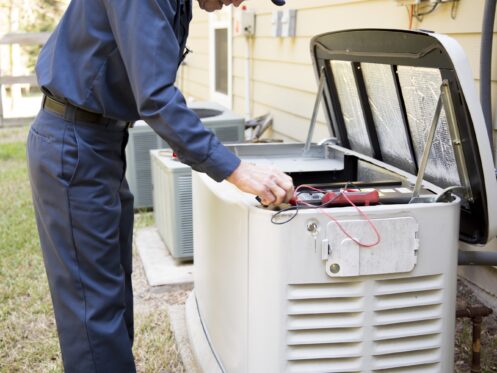
When the grid fails, your generator steps in without hesitation. But how does that transition happen? Understanding how a generator works is less about technical jargon and more about the simple science of movement and magnetism. Whether you’re already using a generator or just curious about how it works, this quick breakdown from our expert electricians will keep things clear and practical.
What Starts the Power Flow?
The heart of a generator is simply a machine that spins fast enough to produce power. You might have a diesel engine driving it, a natural gas unit, or even a solar-charged battery system with a different type of converter, but the principle stays the same. Once the motion starts, electricity follows. That electricity then passes through a regulator and transformer to match the voltage your home needs.
Magnets, Copper, and Motion
The science behind a generator depends on magnetism, copper wiring, and motion working together. The copper wire is coiled into loops and mounted in a fixed position, while strong magnets spin around or inside that coil. That movement creates a changing magnetic field, and that’s what causes the electrons in the wire to move. It’s called electromagnetic induction. The more coils and the faster the spin, the more electricity you get.
Every time you plug in your phone or flick on a light during an outage, that simple physics principle is behind it. The setup may vary by brand or size, but nearly all traditional generators rely on this basic design. Modern models might be quieter or more efficient, but the generator in your backyard is using the same principles Michael Faraday discovered nearly 200 years ago.
How Fuel Becomes Electricity
Whether your generator runs on gasoline, diesel, propane, or natural gas, the goal is the same: keep the motor turning. That fuel powers an internal combustion engine, much like the one in a car. The engine spins a crankshaft that turns the rotor inside the generator. As long as that engine keeps running, you’ll have electricity. The type of fuel you use affects how long the generator can run and how much power it can produce.
Diesel offers higher energy density, which means longer run times per gallon. Propane stores easily and burns cleaner. Natural gas connects to your utility line, which means no refueling if the gas stays on. Each fuel type needs a different storage setup, venting, and maintenance schedule.
Automatic Start-Up and Transfer
Most whole-home standby generators feature an automatic transfer switch. When the power goes out, this switch senses the loss and tells the generator to start. It reroutes the home’s electrical circuits from the grid to the generator. This entire process usually takes less than 30 seconds. Once grid power returns, the switch reverses the connection and shuts the generator down.
Portable generators don’t have this built-in feature, so you need to start them manually and plug them into a transfer panel or selected outlets. Either way, the switch is the middleman. It protects the home from backfeeding electricity into utility lines, which can be dangerous for both your property and nearby line workers. Whether automated or manual, that switching system plays a critical role in making sure the generator sends power to the right places, safely and reliably.
Voltage Regulation and Safety
Generators don’t just push electricity out blindly. They include regulators that monitor and adjust voltage to avoid unpredictable spikes or dips. Sensitive electronics, like your TV, fridge, and HVAC control board, need steady voltage to prevent damage. The generator includes a component called an AVR, or automatic voltage regulator, which adjusts the output to stay within a safe range.
Some high-end units also offer surge protection and overload protection. If something pulls too much current, the generator may shut down to avoid overheating or damaging your devices. You can help this system by staggering your power use. For example, don’t run the dryer, microwave, and air conditioner all at once. Generators can only handle so much at a time, so the more you understand about how they regulate power, the better you can use them during an outage.
Cooling and Exhaust Systems
Generators create a lot of heat. The motor runs for hours under load, which means internal parts build up heat quickly. To keep things working correctly, generators use cooling systems. Air-cooled units use fans to push heat away from the engine, while liquid-cooled models circulate coolant like a car radiator. The larger the generator, the more robust the cooling system. Alongside that, every fuel-powered generator produces exhaust. This has to be vented safely, usually through a fixed pipe that directs fumes away from the house.
You should never run a generator inside a garage or enclosed space, even with a door open. Carbon monoxide builds up fast. Exhaust pipes need clearance, airflow, and careful positioning. If your generator shuts off suddenly or runs rough, clogged cooling or exhaust systems might be the problem. These two parts are what keep the generator safe and functional for extended use.
Stabilizing Power for Home Use
Electricity generated inside a generator isn’t immediately ready for use. The raw output comes in uneven waves, with some fluctuations depending on the motor’s load and fuel quality. That’s why generators include inverters or stabilizers, especially in portable or inverter-style models. These components smooth out the current so that it’s clean and steady.
Computers, phone chargers, and sensitive thermostats all need clean power, not just any current. That’s also why some portable models are labeled “inverter generators.” These produce a high-frequency AC signal, convert it to DC, and then return it to a stable AC signal that mirrors what your home normally uses.
If your home has a smart thermostat or you work remotely during outages, this smooth output matters. Without it, flickering screens, frozen apps, or fried chargers could result from the unstable flow. Clean power means fewer risks during long outages, especially when your home depends on digital tools to function.
Why Generators Need Regular Testing
Your generator won’t help during a blackout if it hasn’t run in six months. Like any engine, it needs regular testing to stay in good shape. That means running the unit for a few minutes every month. This helps circulate oil, charge the battery, and identify problems before they leave you stuck.
If your generator has a battery starter, the battery can die if left unused. Fuel systems can clog. Sensors can fail. If your generator uses natural gas, you might still get startup failures due to mechanical or electrical issues.
Running a test cycle under load lets you hear the engine, feel how it behaves, and spot anything unusual. It’s the difference between a smooth handoff during a storm and a long night in the dark. Some generators have self-testing features built in, but manual runs are still worth doing. You’ll hear unusual noises, check oil levels, and make sure your backup is ready.
Get Reliable Power Now With a Standby Generator
At Monkey Wrench Plumbing, Heating, Air & Electric in Los Angeles, CA, we handle all electrical services, including electrical inspections, panel upgrades, and safety-focused repairs. If you’re looking for reliable backup generator power that works when everything else goes quiet, give Monkey Wrench Plumbing, Heating, Air & Electric a call today.