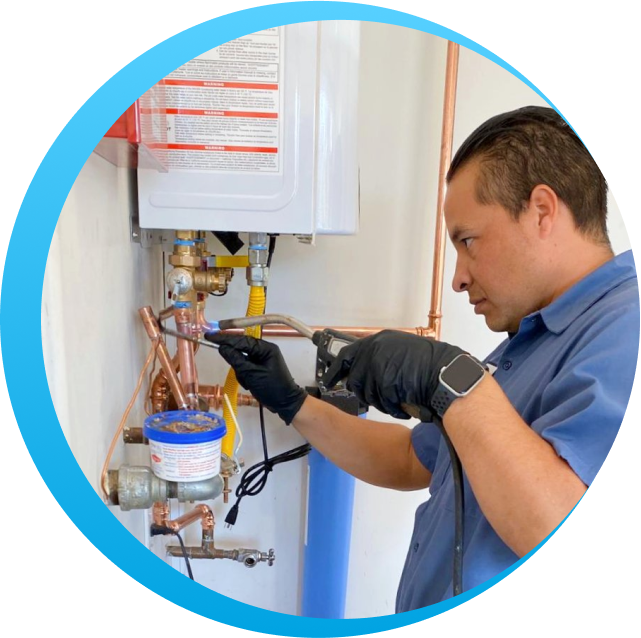
As a Los Angeles homeowner, you may be looking into making updates or upgrades to your digs. While you could always remodel the kitchen, one upgrade that you might want to consider is switching from a traditional water heater to a tankless one. Not only do these units provide you with unlimited hot water, but they also cut your monthly costs significantly.
We’re known for being upfront—so here are a few common tankless services and what they typically cost. Some items are flat-price (no guessing), and some start at a base price because the final cost depends on your home’s setup and the parts your unit needs. Either way, you’ll know what’s going on before any work starts.
Thinking about upgrading to a tankless water heater? See what installation would look like for your home.
Tankless Water Heater costs
Tankless water heater maintenance keeps your system running efficiently by flushing out scale buildup, checking key components, and preventing avoidable breakdowns. Routine service is especially important in hard water areas and can help protect your manufacturer warranty.
A tankless water heater neutralizer protects your home by neutralizing acidic condensation that can corrode pipes, stain surfaces, and harm landscaping. Routine replacement helps maintain performance and meet local compliance requirements.
A tankless water heater recirculation pump improves convenience by circulating hot water through your system for faster delivery and less waste. Retrofit systems may cause brief warmth at cold taps, while dedicated return lines help avoid this.
Tankless water heater heat exchanger replacement restores reliable hot water when the core component becomes clogged or fails due to age or scale buildup. Timely service helps prevent system failure and may preserve warranty coverage.
 Book Now
 Serving
  call us today