 Book Now
 Serving
 call us today
The kitchen sink drains a little slower every week, and the plunger only helps for a day or two. Maybe the shower pools around your ankles, or the same drain backs up again right after you clear it. When a clog keeps coming back, the real question is what kind of help it needs.
Plumbers usually choose between two methods to remove stubborn clogs: snaking and hydro-jetting. Both clear a blockage without chemicals, but they work very differently. Knowing the difference helps you tell when a quick fix is enough and when a deeper clean will save you repeat visits.
How Drain Snaking Works
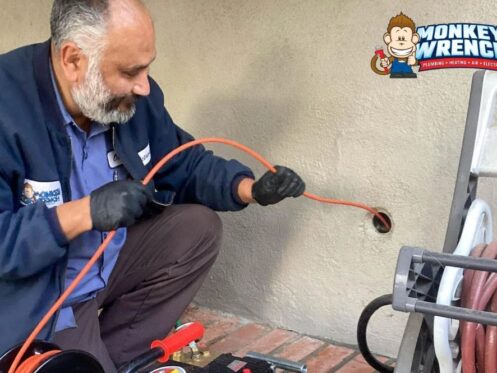
A drain snake is a flexible steel cable with a corkscrew or blade tip. A plumber feeds it into the pipe, then breaks up or hooks the blockage so water can pass. For hair in a shower drain, food in a kitchen line, or paper packed into a toilet trap, snaking is quick and effective, which is why professional drain cleaning often starts there.
The main downside with snaking is that it can leave buildup behind. A snake opens a channel through the clog, but grease and scale can still coat the pipe wall and slow the drain down again.
How Hydro-Jetting Works
Hydro-jetting sends high-pressure water through your pipes using a hose and a specialized nozzle. Instead of poking a hole through the blockage, it scours the inside of the pipe. That removes the grease, scale, and soap residue that make clogs return. The spinning water also cuts through roots that a snake can only partly clear.
Because the method uses only water, nothing harsh goes down your drain. Professional hydro-jetting services clear most lines in a single visit, which is a big part of the appeal for a drain that keeps backing up.
Hydro-Jetting vs. Snaking at a Glance
Both methods can clear a stubborn clog. They differ in reach, cleaning power, and risk to older pipes. Here’s how they compare on the points that matter most to a homeowner:
- Cleaning power: A snake opens a channel through the clog. Hydro-jetting scrubs the full pipe wall.
- Roots and grease: Hydro-jetting cuts through both. Snaking often clears only part of them.
- Pipe condition: Snaking is gentler on fragile lines, making it a better fit for older pipes.
- Chemicals: Neither method needs chemicals to clear clogs.
Most households land on snaking for everyday clogs affecting one fixture at a time and hydro-jetting when a drain keeps coming back or when the main line is clogged.
When to Call for Professional Snaking or Hydro-Jetting
If you’ve tried a plunger and the drain slows again, or several fixtures back up at once, the blockage is probably deeper in the main line and needs professional clearing. A chemical drain cleaner can be tempting, but it’s a poor stand-in for either method because it can damage pipes and leave harsh residue in the line. A snake or a hydro-jet gives a plumber a chemical-free way to clear the blockage without that risk.
A sewer video inspection can find the clog, show whether roots are involved, and assess the condition of the pipe before a plumber chooses a method. It may feel like an extra step, but it matters because high-pressure water can damage pipes that are already cracked, corroded, or worn thin.
The footage also lets you see the problem for yourself before agreeing to any work. A sagging section of pipe, for example, holds water no matter which method you use, and that needs a repair instead.
Get Your Drain Cleared the Right Way
Monkey Wrench Plumbing, Heating, Air & Electric can inspect your line, recommend snaking or hydro-jetting, and clear the blockage, with the price confirmed before any work begins. When you’re ready, schedule drain cleaning and we’ll take it from there.
Frequently Asked Questions About Hydro-Jetting vs. Snaking
Is hydro-jetting worth the cost?
For recurring clogs, grease, or roots, it often is, because it cleans the pipe wall and can spare you repeated snaking visits. The price depends on the length and size of the line, how easy the cleanout is to reach, and how heavy the buildup is. A plumber should give you the number before work starts.
Can I hydro-jet my own pipes?
That’s a risky DIY project because hydro-jetting runs at pressures high enough to injure you and crack weak or old pipes. A plumber checks the line with a camera first and sets the pressure to match what the pipe can handle.
What should I do about a clogged drain with standing water?
Stop running water into the drain, then try a plunger. If the water doesn’t move, or other fixtures gurgle and back up, the blockage is likely in the main line and needs a plumber. Skip chemical cleaners, since they sit in the standing water and can damage your pipes.