 Book Now
 Serving
  call us today
Most homeowners know an AC tune-up involves a filter swap, but that’s really just one piece of a much longer checklist. A thorough maintenance visit touches nearly every component of your cooling system, and knowing what’s supposed to happen during that visit makes it a lot easier to tell whether the technician standing in your driveway is doing a full job or a rushed one.
What Is Professional HVAC Maintenance?
HVAC maintenance refers to the routine inspection, cleaning, and adjustment of a home’s heating and cooling equipment, done to keep the system running efficiently and catch small problems before they become expensive ones.
For most Los Angeles homeowners, that maintenance conversation is really about the AC side of the system. Heaters here run only a handful of days a year, while the cooling system carries the load for most of spring, summer, and fall, so it’s the component that benefits most from a dedicated annual visit.
How Often Should You Schedule AC Maintenance?
Most manufacturers and technicians recommend AC maintenance once a year, ideally in the spring before cooling season ramps up and your system has to work its hardest. Homes with pets, higher dust levels, or systems that run nearly nonstop through the summer sometimes benefit from a second check midseason.
A few signs mean it’s worth moving that visit up rather than waiting for your usual schedule:
- Rising energy bills with no real change in how you’re using your system.
- Weak or inconsistent airflow from one or more vents.
- Longer cooling cycles than the system used to need to reach the same temperature.
- A musty or burning smell when the system kicks on.
- It’s been over a year since your last professional visit.
None of these are necessarily an emergency on their own, but together they’re a good reason to get a technician out sooner.
What Does Annual AC Maintenance Include?
A real AC maintenance appointment is closer to a full system checkup than a quick once-over, and each of the steps below plays its own role in keeping your cooling system efficient and reliable through the season.
1. Cooling Efficiency Test
Before touching anything, a technician checks how well your system is cooling by comparing the temperature at the vents to the temperature at the return. This baseline reading often reveals problems, like weak airflow or an undercharged system, before they turn into a full breakdown.
2. Air Filter Replacement
Replacing your air filter takes minutes, but skipping it for too long restricts airflow and forces your system to work harder than it needs to. This is one of the few AC maintenance steps you can also handle yourself between visits, and most manufacturers recommend replacing filters every one to three months depending on the type. This guide breaks it down in detail so you can determine the best replacement schedule for your home.
3. Refrigerant Level Check
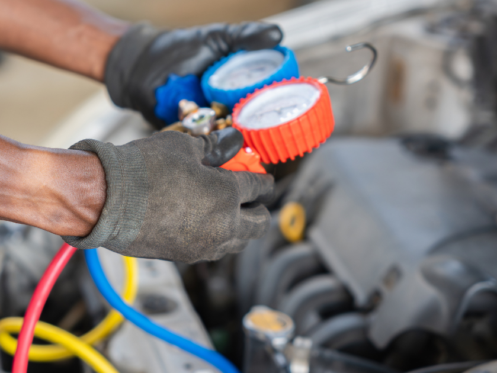
Refrigerant should stay at a consistent level for the life of the system, so a drop usually points to a leak somewhere in the lines. Technicians use pressure gauges to confirm the charge is where it should be and flag any leak for repair before it affects cooling performance.
4. Outdoor Unit Cleaning
The condenser sits outside all year, which means dust, leaves, and debris build up around and inside it over time. A technician clears that buildup and cleans the coil so the unit can release heat the way it’s designed to, instead of working against a layer of grime.
5. Ductwork Inspection
Leaky or obstructed ductwork can undercut even a perfectly tuned system, so maintenance includes a look at accessible ductwork for gaps, disconnections, or airflow issues. This step is especially worth asking about in older homes, where ducts have often been patched or rerouted over the years and may be good candidates for replacement.
6. Wiring and Electrical Check
Since your AC runs on electricity, technicians check the wiring, capacitors, and access panels for wear, then measure voltage to confirm the system is getting the power it needs. Catching a failing electrical component during maintenance is far less disruptive than dealing with it as an emergency repair later.
7. Tightening Loose Connections
Vibration from daily operation gradually loosens screws and fittings throughout the system. Tightening these during maintenance prevents small air leaks and mechanical wear that can shorten the system’s lifespan if left alone.
8. Bearing Lubrication
Moving parts like fan motor bearings need lubrication to keep friction (and the heat that comes with it) in check. Skipping this step is a common reason fan motors burn out earlier than they should.
Benefits of Regular HVAC Maintenance
Every item on that checklist has a purpose, and together they provide real, measurable benefits:
- Lower energy bills: A well-maintained system runs more efficiently, which means lower cooling costs without any change in how you use it.
- Fewer emergency repairs: Catching small issues, like a slow refrigerant leak or a loosening electrical connection, during a routine visit prevents them from turning into breakdowns later.
- A longer system lifespan: Regular upkeep reduces the wear and tear that impacts how long your equipment lasts.
- Warranty protection: Many manufacturer warranties require proof of annual maintenance to stay valid, so skipping it can cost you coverage you’re already paying for.
- Fewer surprises during extreme heat: Skipping routine checks can turn a slow leak or a loose connection into an unexpected service call in the middle of a heat wave.
The Department of Energy’s Energy Star program points to regular maintenance as one of the simplest ways to avoid the kind of neglect that leads to early breakdowns. Simply put, consistent maintenance is what keeps small issues small. Monkey Wrench makes it easy to stay on top of maintenance, too. When you join our Home Protection Plan, you’ll get an annual 20-touchpoint heating and cooling tune-up included, along with priority scheduling and no service call fees.
Keeping Your System Ready Year-Round
A professional AC maintenance visit is worth far more than the filter swap most people picture. It’s a full check of the components that keep your system efficient, reliable, and less likely to fail when you need it most.
That’s the idea behind Monkey Wrench Plumbing, Heating, Air & Electric’s approach to AC maintenance. Our EPA-certified technicians run through the full checklist at every visit, not an abbreviated version, and if something needs more than routine maintenance, we’ll walk you through your AC repair options honestly before recommending next steps.
If it’s time for your system’s next tune-up, contact us to get on the schedule.